 Skip to content


The climate of Houston is characterized by rain, tropical storms and unexpected flooding which leads to severe water intrusion issues in business premises. Office buildings and retail areas are particularly susceptible due to the size of their roofs, their complicated drainage networks, and high traffic of pedestrians on a daily basis.
Water intrusion is not just a slight inconvenience, but may cause interior damage, business impediment, health risks and costly repairs. To property managers and business owners in Houston, prevention strategies are important in order to safeguard investment and ensure safe working and customer conditions.
What Is Water Intrusion?
Water intrusion Water intrusion can be described as the water entering the building by penetrating the building through the weak points. Water intrusion can also be a result of internal plumbing breakages or roof leaks as opposed to flooding, which is normally external.
The general entry points on commercial properties in Houston are roofs, windows, exterior walls, plumbing systems, and cracks on the foundations.
Frequent Reasons of Water Intrusion in Office buildings
The weather and ageing infrastructures in Houston also tend to generate an environment in which water can easily find its way into the buildings.
Roof Leaks
Commercial roofs are usually fitted with HVAC units, vents, and drainage systems. At failure of flashing or sealing, rainwater may percolate in ceilings and walls.
Damaged Building Envelope
Fissures in the external walls, ineffective sealing the windows, or worn-out siding permit rain to enter the building.
Blocked Drainage Systems
Overflowing gutters, roof drains, or downspouts do not allow water to drain off the building.
Plumbing Failures
Moisture can be hidden, as a result of burst pipes or leaking plumbing systems within walls and floors.
Poor Foundation Drainage
Inappropriate yardage grading in the area surrounding commercial properties permits the accumulation of water around the areas, which leads to leaks or construction damages.
The reason why water intrusion is a significant threat to businesses.
The damage caused to water can interfere with the operations and costly losses to the commercial property owners.
Key Risks Include
- Physical destruction of walls, ceiling and flooring.
- Growth of molds which impacts on indoor air quality.
- Water exposure Hazards of electricity.
- Retail setting inventory damage.
- Interruption in businesses resulting in reduced revenue.
Even the small leaks might grow fast unless they are dealt with at a tender age.
Water Intrusion Risks and Prevention for Houston Commercial Properties
| Risk Area | Common Causes | Warning Signs | Prevention Strategy |
|---|---|---|---|
| Roof Systems | Damaged flashing, aging roofing materials, clogged roof drains, HVAC installations | Water stains on ceilings, dripping during rain, mold near roof lines | Schedule biannual roof inspections and clean roof drains regularly |
| Windows & Exterior Walls | Poor sealing, cracked siding, damaged window frames | Peeling paint, wall discoloration, drafts, moisture around window edges | Reseal windows, repair cracks in walls, and maintain weatherproof coatings |
| Drainage Systems | Blocked gutters, overflowing downspouts, poor water flow | Water pooling near building edges, overflowing gutters during storms | Clean gutters and drains regularly and ensure proper water flow away from building |
| Plumbing Systems | Burst pipes, leaking joints, aging plumbing infrastructure | Damp walls, unexplained water spots, musty odors | Conduct regular plumbing inspections and repair leaks immediately |
| Foundation & Ground Drainage | Poor grading, soil erosion, foundation cracks | Water accumulation near foundation, basement moisture, structural cracks | Improve landscape grading and install proper drainage systems |
Redflags of Water Penetration.
Major damage can be best avoided by early detection.
Look for These Indicators
- Stains of water on ceilings or walls.
- Stuffy perfumes in the work place or the store.
- Cracking paint or walls that have blister.
- Crooked floors or wet carpets.
- Visible mold growth
- Increased indoor humidity
Regular checkups facilitate the detection of these problems before they turn out to be significant structural problems.
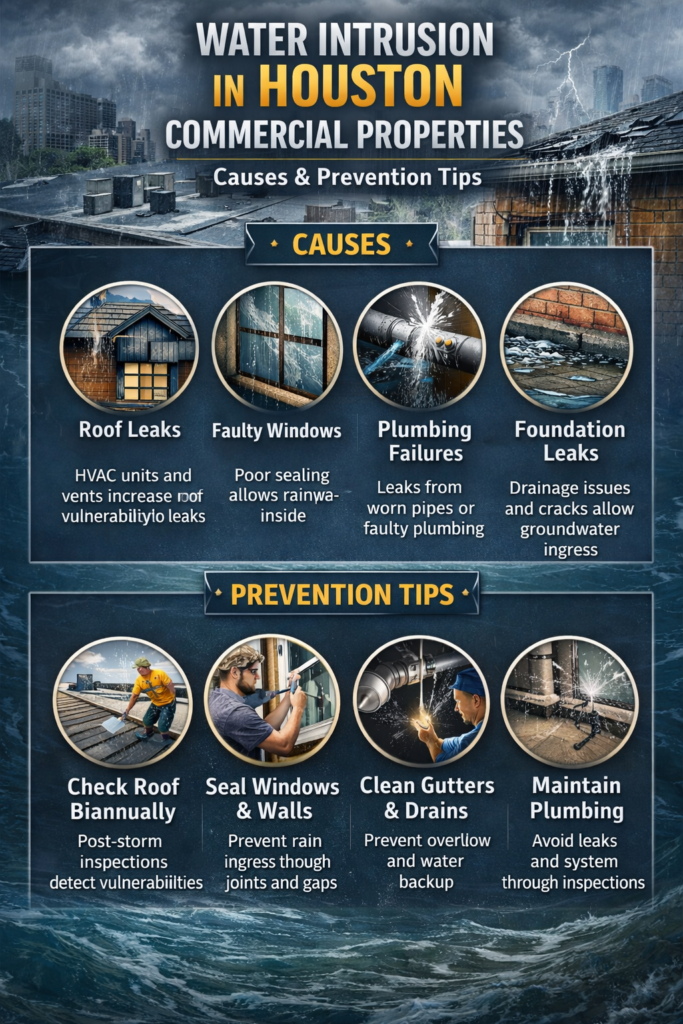
Prevention of Houston Commercial Properties.
The risk of water intrusion can greatly be mitigated by taking proactive measures.
Arrange Periodic Roof Checks.
A commercial roof is to be checked at least biannually and importantly after major storms.
Maintain Drainage Systems
Gutters, roof drains and downspouts should also be kept clean to avoid water accumulation.
Close Windows and Exterior Joints.
Sealing should be done so that rain waters do not penetrate through cracks or gaps.
Upgrade Waterproofing Systems.
The contemporary waterproof membranes and coats can enhance shield against the invasion of moisture.
Monitor Plumbing Systems
Performing regular plumbing inspections makes it possible to identify the presence of any leakages before they can cause significant destruction of water.
Improve Landscape Drainage
They grade properly around the building to keep the water away around the building.
The Significance of Professional Water damage Prevention.
The commercial premises need special expertise and machineries to effectively guard against water intrusion. The expert maintenance staff can detect weaknesses that cannot be detected in regular inspections.
Experts typically provide:
- Measures of structural moisture.
- Drainage and roof inspection.
- Waterproofing solutions
- Leak detection technology
- Emergency mitigation water services.
It can be worked with experienced professionals in order to protect Houston businesses in the long run.
Houston Prevention has to make prevention a priority due to climate.
The reconstructive moisture in Houston is a major problem since the city experiences a lot of storms and is highly humid. Preventative maintenance does not only come as a recommendation but also key to asset security and operational stability.
Companies invest in preventive maintenance of building to save money on repairs and downtimes.
Conclusion
To avoid water intrusion in Houston office buildings and retail space, there should be a proactive measure such as routine check-ups, good drainage facilities and good waterproofing systems.
Vulnerability can be identified at an early stage and building infrastructure can be maintained by property owners, which will result in protecting investments, business continuity, and provide a secure workplace and environment to employees and customers.

