


Houston has been very prone to storms, water flooding and extreme moistness and hence properties are highly exposed to the development of moulds as well as extreme water damage. Although simple clean ups may suffice in addressing minor problems, sometimes, living in the property may not be safe anymore. Temporary evacuation is not only advisable in such situations, but to safeguard your health and safety, this is a must.
Realization of the Risk in Houston Properties
Houston weather can cause water damage in homes and commercial buildings to spiral out of control because of the warmer and wet climatic conditions. Mold may start developing in 24-48 hours on wet surfaces like drywall, carpets, insulation, and wood.
Serious water damage may also affect:
- Structural integrity (walls, ceiling, flooring, etc.)
- Electrical systems
- Indoor air quality
Once such risks attain a critical level then evacuation is the best way to go.
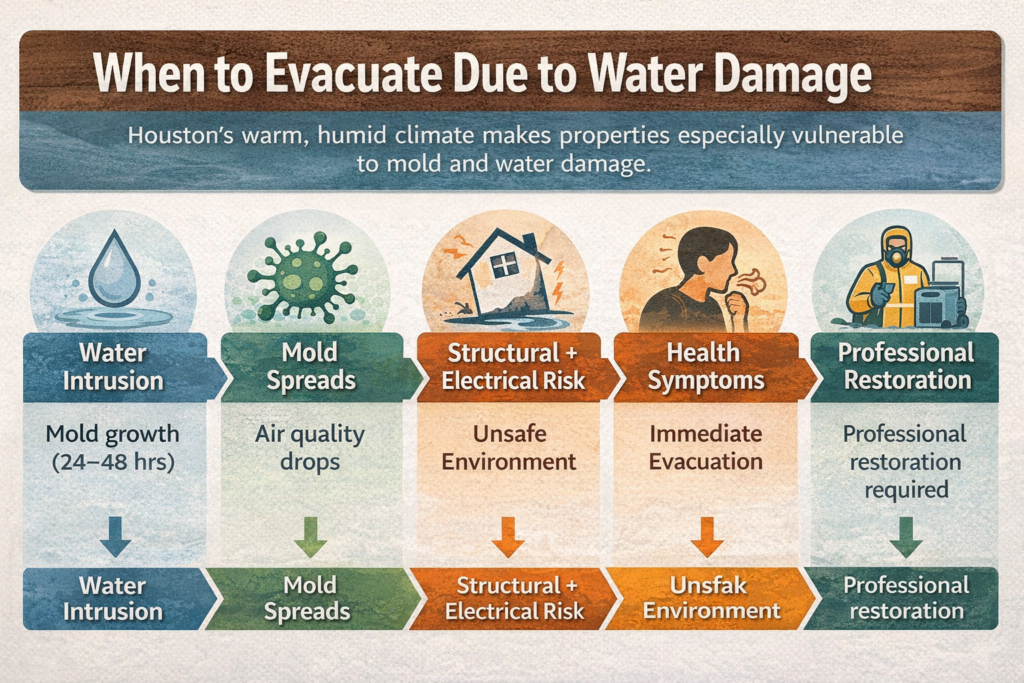
Indications That Evacuation is possible
You do not always need to move out of your house in case of water damage. Nevertheless, the next symptoms are the evidence of a critical threat:
Extensive Mold Growth
- Mold that is visible and extends over extensive spaces (greater than 10 square feet).
- Mold proliferating in the HVAC systems.
- Powerful, enduring stale smells.
Health Symptoms Occupant.
- Continuous coughing, sneezing or headache.
- Irritation of the skin or redness of the eye.
- The exacerbation of asthma or breathlessness.
Such symptoms usually point to bad indoor air quality that is a result of mold spores.
Structural Damage
Building materials may get weakened by water and the building is not safe anymore.
Common warning signs:
- Dropping ceilings or slanting floors.
- Wall or foundation cracks.
- The doors and windows no longer close.
Electrical Hazards
Electricity and water is a terrible mix. Evacuation is necessary if:
- Electrical outlets are exposed to water.
- Circuit breakers are easily tripped.
- There’s a risk of fire or shock
Polluted Water (Category 2 or 3)
Floodwater in Houston usually includes:
- Sewage
- Chemicals
- Bacteria and pathogens
This form of water damage is deadly to health and has to be professionally remedied.
Content layout (left to right):
- Water intrusion – Mold growth (24-48 hrs)
- Mold contagion- Air quality reduces.
- Structural/electrical risk- Unsafe environment.
- Health symptoms – Emergency evacuation.
- Professional restoration was necessary.
Mold & Water Damage: When Evacuation is Required
| Condition | Severity Level | Risk to Occupants | Evacuation Needed | Recommended Action |
|---|---|---|---|---|
| Small localized mold (under 10 sq ft) | Low | Mild irritation possible | No | Clean with proper PPE or minor remediation |
| Mold spreading across multiple rooms | High | Respiratory issues, allergies | Yes | Professional mold remediation required |
| Strong musty odor throughout property | Medium–High | Poor indoor air quality | Possibly | Air testing + inspection |
| Floodwater (clean water – Category 1) | Medium | Limited health risk initially | No (temporary) | Drying and dehumidification |
| Grey water (Category 2) | High | Bacteria exposure risk | Yes | Professional cleanup & sanitation |
| Black water/sewage (Category 3) | Severe | Serious health hazards | Immediate | Full evacuation + biohazard cleanup |
| Electrical system exposed to water | Severe | Shock/fire hazard | Immediate | Shut power + evacuate + electrician needed |
| Structural damage (ceilings/floors) | Severe | Collapse risk | Immediate | Structural inspection + evacuation |
| Health symptoms (asthma, coughing) | High | Ongoing health deterioration | Yes | Seek medical + environmental assessment |
Where Authorities or Professionals Recommend the Evacuation
Evacuation is recommended in certain instances by:
- Insurance adjusters
- Mold remediers.
- Local safety inspectors
In case professionals conclude that the house is not safe, one should act as soon as they order.
What to Do Before Evacuating
In case you have to leave your house, do the following:
- Switch off electric light and gas (unless there is a risk of doing so)
- Into the insurance with photos/videos to repair documents.
- Prepare basic things (documents, medications, valuables).
- Target your insurance company.
- Get temporary accommodation.
How Long Should You Stay Away?
The time will be determined by the extent of the damage:
- Minor mold remediation: 1-3 days
- Repair of moderate cases of water damage: 3-7 days.
- Serious contamination or construction loss: Few weeks.
It is usually dangerous to go back before professional clearance testing is done.
Avoiding Future Evacuations
In order to minimize the threat of extreme damages in Houston:
- Provide adequate drainage systems.
- Keep roofing and plumbing in order.
- Install dehumidifiers in damp places.
- Act on any water intrusion.
When it is done early enough, a minor problem can be avoided and grow into a large scale evacuation situation.
If your property shows signs of serious water damage or mold, acting quickly is essential. Explore our expert solutions at Pro Texas for professional inspection, water removal, and complete restoration services. Our team ensures safe, efficient recovery, helping you prevent long-term damage and avoid costly repairs in Houston properties.
Conclusion
It is not just a property problem, but a health and safety concern when there is mold and in extreme instances water damage. The climate in Houston can cause issues to grow out of proportions, and even temporary evacuation can be required in the worst instance.
When you observe excessive moulds, structural imbalance or health-related symptoms, do not turn a blind eye. Temporarily vacating the premises may save the lives of your family or staff and leave the clean-up process to the professionals.
