 Skip to content


The climate of Houston already provides the ideal breeding ground to mold, but in the case of floods, the danger is large. With the recent flooding around the Houston region, several homeowners and companies have reported quick moulds within only days after the water started to seep into the property.
Floodwater penetrates walls, floors, insulation, furniture and building structures. Mold spores grow rapidly when they are kept in the damp conditions and this causes structural damage as well as severe health risks.
The knowledge of the lessons acquired after recent Houston floods will allow property owners to avoid the appearance of molds and ensure the safety of their home and workplace against permanent destruction.
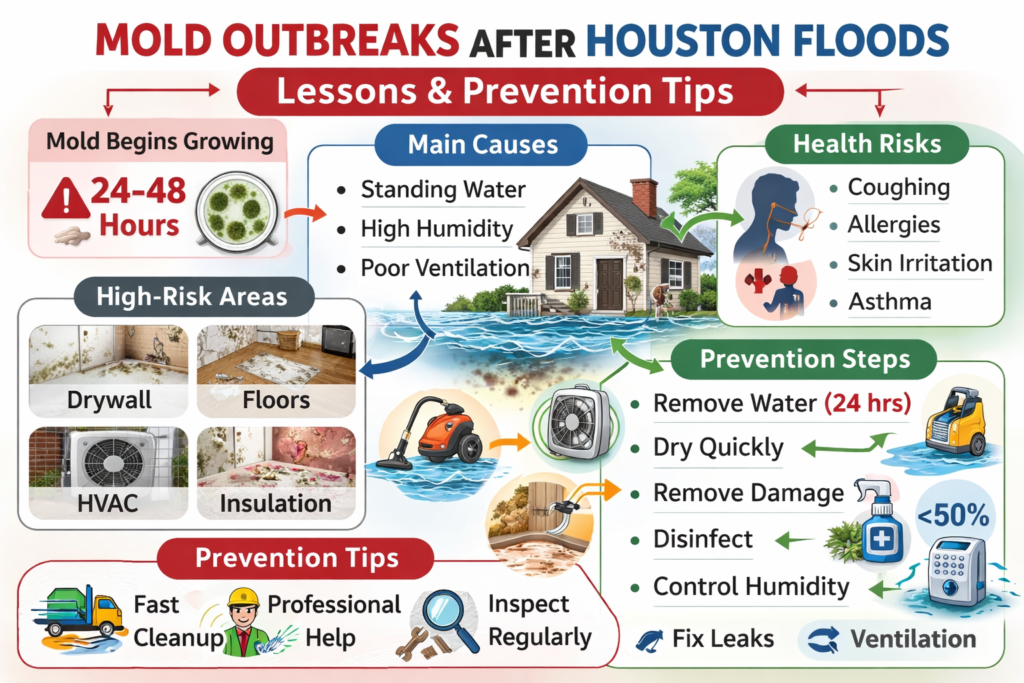
The reason behind the extreme mold problems as a result of flooding
Floodwater in a property provides the most favorable environment of mold growth. Mold spores are found naturally in the air, however, when the conditions are conducive through moisture, sensations of warmth, and organic matter, the colonies grow quickly.
Peculiarities that promote the growth of molds:
- The climatic conditions in Houston have high levels of humidity.
- Wooden structures, wet drywall and insulation.
- Following flooding, poor ventilation.
- Delayed cleanup and drying
- polluted floodwater with bacteria and spores.
The mold may start developing within 24-48 hours of the occurrence of a flood, and this is the reason why it is essential to react quickly.
Areas that are most susceptible to the mold following a flood
The hidden parts of buildings are usually exploited by floods resulting in mold which is hard to notice until it becomes severe.
| High-Risk Area | Why Mold Develops |
| Drywall & Insulation | Absorbs water quickly and stays damp |
| Carpets & Flooring | Traps moisture underneath surfaces |
| HVAC Systems | Circulates spores throughout buildings |
| Wooden Structures | Organic material supports mold growth |
| Basements & Crawlspaces | Poor ventilation and trapped moisture |
Surfaces may seem dry, but the fact remains that there might be concealed moisture behind walls or under flooring that contributes to serious cases of molds.
Health risks which are related to the exposure to mold
The problem of Mold contamination is not only structural but can also affect the quality of indoor air and human health.
The typical health effects associated with exposure to mold are:
- Constant cough or sneezing.
- Eye and throat irritation
- Asthma flare-ups
- Skin irritation
- Headaches and fatigue
Children, the elderly and persons with respiratory problems are particularly susceptible.
Lessons to be Learned on the Recent Houston Floods
The cases of floods throughout the Greater Houston region have provided some of the key lessons to property owners.
Fast Drying Is Critical
The faster damaged materials by water are dried, the less the chances of mold development. The use of professional drying can help in eliminating a lot of moisture.
Moisture Flakery Is a Secret Menace
Water tends to leak behind the drywall, flooring and behind insulation. The colonies of molds may develop without notice unless adequately checked.
Home cleanup Frequently lacks sources of mold
Surface cleaning is not good enough. Mold spores that have implanted in porous materials need professional remedial practices.
Prevention Inspections are cost-effective
It is possible to find out the moisture spots before it becomes an expensive mold problem by having regular post-flood checks.
Post Flood Mold Prevention
Immediate action after a flood can play a significant role in the mitigation of the chances of mold.
Critical steps of prevention of molds:
1.Take standing water off.
2.Decreased intensity of dry affected areas in 24-48 hours.
3.Apply industrial fans and dehumidifiers.
3.Take out insulation, drywall and carpet that is damaged.
4.Wipe down and clean dirty surfaces.
5.Check HVAC systems to check moisture accumulation.
Severe contamination could require professional mole remediation.
Suggested Flood cleanup schedule.
| Time After Flood | Recommended Action |
| First 24 Hours | Remove standing water and begin drying |
| 24–48 Hours | Inspect for early mold signs |
| 2–5 Days | Remove water-damaged materials |
| 1 Week | Conduct full mold inspection |
| Ongoing | Maintain ventilation and humidity control |
Adhering to this plan will mitigate the chances of massive outbreak of molds to a considerable extent.
Prevention of Mold in Long-term in Properties throughout Houston
Due to the floods and storms that are common in Houston, there is need to have long-term prevention strategies.
The owners of property ought to take into account:
- Drainage systems should be installed.
- Sealing foundation cracks
- Enhancing the ventilation of attics and crawlspaces.
- Applying drywall and insulation that is mold resistant.
- Keeping the humidity rate at less than 50%
Small moisture issues can also be prevented so that they do not develop into major mold infestations by conducting routine inspections following heavy rainfall.
For reliable flood recovery and mold prevention solutions, trust protexas for expert services across Houston. From water extraction to complete mold remediation, their team ensures fast, effective restoration. Choosing protexas helps protect your property, improve indoor air quality, and prevent costly long-term damage after severe flooding events.
Conclusion
Water damage may cause severe cases of mold outbreaks unless mitigation strategies are implemented in the immediate future. Mold may grow in a few days and will destroy building materials and influence the quality of indoor air.
With the knowledge about the lessons of the recent floods and the action that can be taken to prevent the onset of molds, the property owners can go a long way in minimizing the risk of the growth of molds and ensure the safety of the buildings and the health of the occupants.
The early prevention with mold outbreaks after the flooding, appropriate drying, and professional examination are the most efficient measures of resistance.

