


Residing in Houston implies that it is high humidity, unpredictable rains, and protracted seasons of cooling down. These environments render most houses susceptible to dampness issues that silently transform to moulds. It is not so much the mold plain to the eye, but the Hidden spots of the mold, growing unknown within your house.
Here is where you will get to know where mold tends to be hidden, the high-risk areas, and why you should avoid letting things get out of control that you would end up spending a lot of money on the repairs.
What makes hidden molds prevalent in the homes in Houston?
The climate in Houston provides the ideal conditions that allow the growth of molds. Indoor heat and outdoor moisture in the air together with air-conditioning systems and a few the cases where water seeps inside the enclosed buildings keep moisture trapped in humid spots. Mold spores are able to start growing when the damp surfaces are not disturbed that fast 24 to 48 hours.
Since the areas are not regularly inspected, Hidden mould spots would go active in a matter of months.
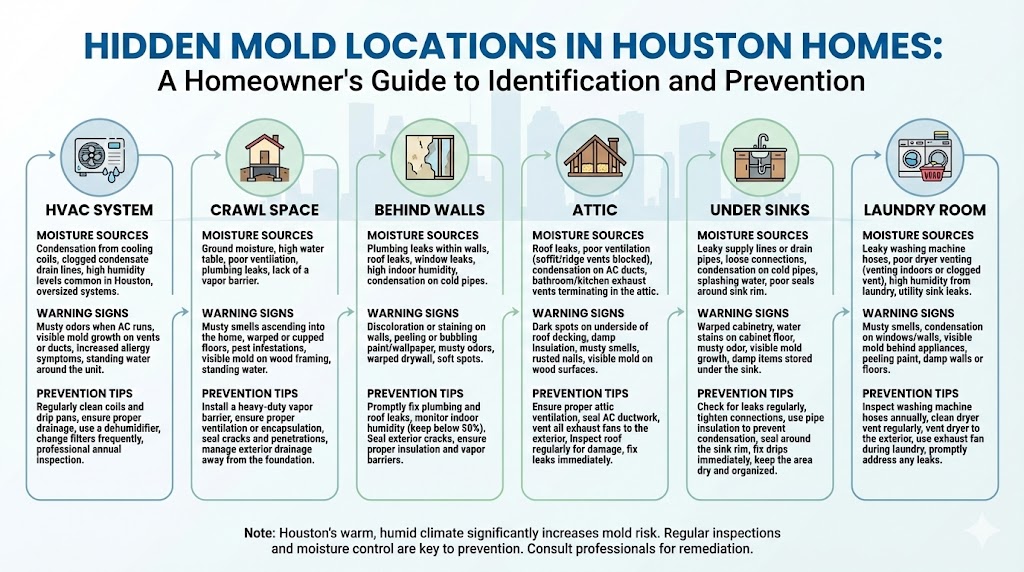
HVAC systems and air ducts
The heating and cooling system continually draws air through moist parts. Formation of condensation may occur indoors:
- Evaporator coils
- Drain pans
- Air handler cabinets
- Duct insulation
Adding moisture to the dust in ductwork forms the perfect environment of feeding mould.
The typical indicators are damp smells of when the AC is on, aggravating allergies, and unexplainable breathing discomfort. The air system causing air circulation throughout the home is one of the Hidden mold spots that are mostly ignored.
Under-floor space and crawl space.
Houston houses have crawl spaces which remain damp throughout the year. Poor ventilation, ground moisture, and leaks in the plumbing system establish dampness in permanency.
Mold typically grows on:
- Floor joists
- Subfloor panels
- Vapor barriers
- Insulation backing
Due to the innate access of the crawl spaces by the homeowners, these places easily become long-term Hidden mold areas that can influence the quality of indoor air on the stairs.
All behind the walls and drywall cavities.
Mold within walls is normally occasioned by:
- Slow plumbing leaks
- Immigrant roof leaks/driving framing/immigrant.
- Condensation on cold pipes
- Poorly sealed windows
Paint can appear normal and mold can be growing in the cavity of the wall. Discoloration, peeling paint, thin drywall or even a slight bulge are all indicative. They are among the most harmful Hidden mold locations as they multiply without any notice.
Bathroom and cabinet in the kitchen.
The interiors of the cabinet under sinks are exposed to the moisture of the plumbing systems, the various cleaning compounds and cleaning spills. Dark warm cabinets are optimal environments that promote the growth of molds.
Look for:
- Swollen cabinet panels
- Warped shelving
- Musty smells when doors open
These storage sites tend to form long term Hidden mold places, which are only spotted by the homeowners after the damages are visible.
Attics and roof framing
Cooler indoor air is introduced to hot attic air which may lead to condensation of roof decking and insulation. The addition of even more moisture is poor ventilation, blocked soffits, and improperly sealed bathroom exhaust fans.
Mold frequently forms on:
- Roof sheathing
- Truss joints
- Attic insulation
The location because the majority of the homeowners do not check attics often, and this is one of the most widespread Hidden mold locations in the Houston properties.
Utility areas and laundry preparation areas.
Kettles, dishwashers, and water pipes may have water leakage without alarming them. Wall penetrations, floor drains and washer supply hoses are common areas of moisture accumulation.
With time, mold may develop behind the appliances and in the cavities within the walls.
Common hidden mold locations and warning signs
| Area of the Home | Typical Moisture Source | Common Warning Signs | Risk Level |
| HVAC system & ducts | Condensation, clogged drain lines | Musty smell, allergy symptoms | High |
| Crawl space | Ground moisture, plumbing leaks | Sagging floors, odors | High |
| Behind walls | Pipe leaks, roof leaks | Bubbling paint, stains | Very High |
| Under sinks & cabinets | Slow plumbing leaks | Warped wood, mold odor | Medium |
| Attic | Condensation, poor ventilation | Dark patches on sheathing | High |
| Laundry/utility room | Hose leaks, floor drains | Damp flooring, stains | Medium |
Trusted Services Across Texas
When it comes to reliable, high‑quality services in Texas, Pro Texas stands out as a trusted name dedicated to exceeding customer expectations. Whether you’re seeking industry‑leading solutions, expert support, or tailored services designed to fit your needs, Pro Texas delivers professional results with a commitment to excellence and integrity. Learn more about how Pro Texas can help you achieve your goals by exploring their full range of services and customer‑centered approach at Pro‑Texas.com — your go‑to destination for dependable expertise and exceptional service throughout the Lone Star State.
Health and structural risks
Surfaces are not the only ones that are susceptible to hidden molds. It spreads being sprayed to the air causing:
- Persistent coughing
- Sinus congestion
- Asthma flare-ups
- Skin and eye irritation
In terms of building, mold decays the drywall and wood framing, insulation and flooring gradually. This may eventually result in a structural repair which may prove to be expensive.
The prevention of mold spread: how to tell when it is present.
There is no need to have advanced equipment to have an early warning. Simple steps include:
- Inspection at sinks monthly.
- Checking of HVAC drain pans and filters.
- Checking to see whether there is discoloration around the vents and registers.
- Investigating baseboards when it rains heavily.
- Checking the humidity of the house using a digital hygrometer.
Professional checkups can involve moisture gadgets, infrared videos, along with air samples in case of the hunch of mold appearing at the back of surfaces.
Education to stop Houston homeowners.
The mold can grow only through the control of moisture, which is the only sure way to prevent it.
Key actions include:
- Having the indoor humidity at less than 55.
- Installation of the correct attic and bathroom ventilation.
- Routine servicing of air condition systems.
- Plugging exterior wall perforations.
- Fixing minor leaks in plumbing.
Preventive maintenance will drastically lessen the possibility of accumulation of moisture in the “long-run” interior of walls, ceilings, and floors.
When quality and efficiency of work require professional intervention.
When the mold is widespread or when it is noted to be in or around ductwork, or has been suspected to be in wall cavities, then professional remediation is highly advisable. Poor elimination may cause spores to spread all over the house and aggravate pollution.
Final Thought
Mold will not require observable waters to develop. Small volumes of trapped moisture have the ability to silently transform HVAC systems, crawl spaces and wall cavities in Houston into severe contamination sources in the humid environment. Being aware of the places where Hidden mold grow and examining your house in regular periods you will be able to not only keep your family safe but also your house. Timely fixing, moisture control and early detection are the most effective preventive measures against chronic mold issues.
