 Skip to content


The process of recovery following the effects of water damage or storms goes beyond replacing what has been destroyed, it is a chance to ensure that it is stronger and wiser than before. The humidity and rain are present in Houston and it provides the best possible environment in which molds thrive. Homes may soon be affected by the recurrent moisture issues when they lack the correct materials. When used correctly, the knowledge of Choosing Mold-Resistant Materials to Reconstruction in Humid Climate of Houston can help homeowners to save their investment and enhance the quality of indoor air in the long-term.
The humidity in Houston usually stays at 60 and above which means that the spores of the molds can grow in case moisture is available. When building the right building components in the process of reconstruction, the chances of contamination reoccurring is minimized.
The reasons why normal material does not work in damp climate
The old drywall, untreated wood and some types of insulation have the ability to soak up moisture. They provide inaccessible breeding sites of molds when they are subjected to prolonged wetness or small leakages.
Some possible failure points are:
- paper-faced drywall
- vapor barrier-free fiberglass insulation.
- particleboard cabinetry
- subfloors untreated plywood.
- carpet lining on wet places.
The upgrade to mold resistant solutions Houston avoids these weaknesses.
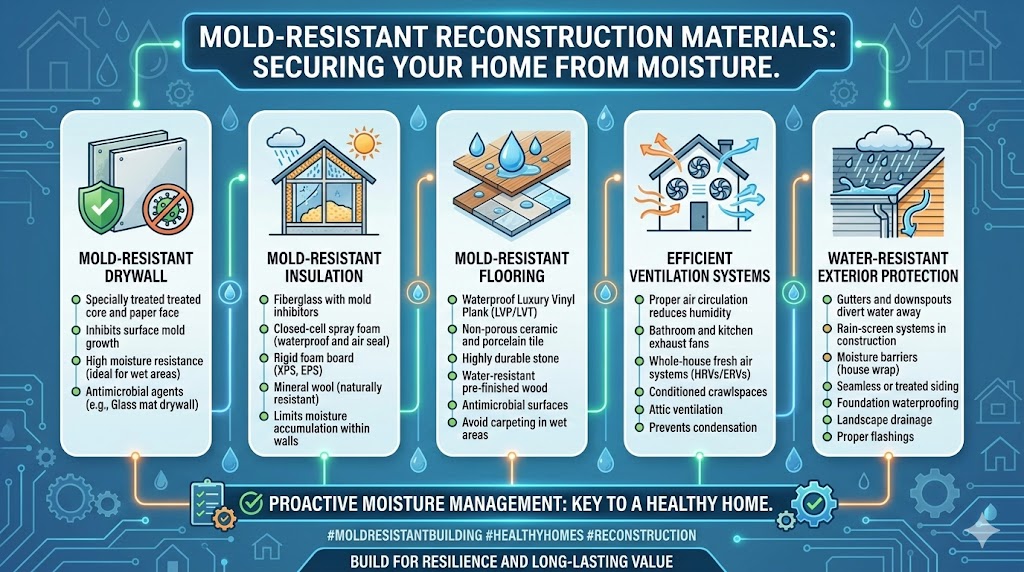
Mold-resistant drywall
It is a mold-resistant drywall that has fiberglass facing in place of paper backing. Drywall made of paper is organic material that is used by mold feeds on.
Benefits:
- less possibility of mould growth.
- improved durability
- better moisture resistance
- increases life expectancy in the humid environment.
It is among the most prescribed materials in reconstruction of humid climatic environment.
Water-resistant insulating solutions
Moisture can be trapped within the standard fiberglass insulation unless it is well sealed.
The improved alternatives are:
- closed cell spray foam insulation.
- rigid foam boards
- mineral wool insulation
Closed-cell spray foam is an insulator as well as a moisture barrier and is therefore suitable to Houston houses.
Engineered or treated wood products
When it is exposed to moisture, wood framing is prone to mold.
Options to consider:
- pressure-treated lumber
- engineered wood having moistureproof finishes.
- composite materials
- metal framing of some areas.
These are the materials that do not contain organic growth and warping risks.
Flooring materials that are resistant to molds
A significant task is undertaken by the flooring to avoid moisture retention.
Best options include:
- porcelain tile
- luxury vinyl plank
- sealed concrete
- rigid core flooring
Carpet should be avoided in a place where humidity is likely to occur or one where water has been exposed.
Coatings and paint that is resistant to mold
There are special paints, to which antimicrobial additives are added to inhibit growth of moulds on surfaces.
Advantages:
- added surface protection
- reduced mildew formation
- improved durability
- easier maintenance
These finishes are applicable especially on the bathroom, kitchen and laundry rooms.
Material comparison table
| Material Type | Mold Resistance | Best Use Area |
| Mold-resistant drywall | High | Walls & ceilings |
| Spray foam insulation | Very high | Attics & walls |
| Porcelain tile | Excellent | Bathrooms & kitchens |
| Pressure-treated lumber | Moderate–High | Structural framing |
| Mold-resistant paint | Moderate | Interior finishes |
Enhanced ventilation and moisture covers
The best materials need to have airflow.
Reconstruction must entail:
- vapor barriers
- attic ventilation upgrades
- exhaust fans in wet areas
- dehumidifier installation
- suitable sealing of windows and doors.
The choice of the material and ventilation reinforces the strategies in Choosing Mold-Resistant Materials for Reconstruction in Houston, which is a humid climate.
HVAC during reconstruction
The correct HVAC system is a starting point of high humidity control.
Important upgrades:
- humidity control systems
- adequately oversized air conditioning units.
- sealed ductwork
- regular maintenance plans
Indoor humidity is controlled which helps to minimize the risk of mold.
Trusted Services Across Texas
When it comes to reliable, high‑quality services in Texas, Pro Texas stands out as a trusted name dedicated to exceeding customer expectations. Whether you’re seeking industry‑leading solutions, expert support, or tailored services designed to fit your needs, Pro Texas delivers professional results with a commitment to excellence and integrity. Learn more about how Pro Texas can help you achieve your goals by exploring their full range of services and customer‑centered approach at Pro‑Texas your go‑to destination for dependable expertise and exceptional service throughout the Lone Star State.
Outside flooring and drainage enhancements
The exterior construction options also affect the level of moisture on the inside.
Consider:
- fiber cement siding
- moisture-resistant sheathing
- improved gutter systems
- proper grading off foundation.
- waterproof membranes
The initial defense against mold is the prevention of water intrusion.
Cost vs long-term protection
| Upgrade Type | Initial Cost | Long-Term Benefit |
| Standard drywall | Low | Higher mold risk |
| Mold-resistant drywall | Moderate | Reduced repair costs |
| Basic insulation | Low | Moisture retention |
| Spray foam | Higher | Energy + mold protection |
While mold-resistant materials may cost more upfront, they often prevent repeated remediation expenses.
Some typical reconstruction pitfalls
- putting up regular drywall after the floods have destroyed it.
- omitting the moisture testing prior to rebuilding.
- not maintaining insulation.
- ignoring attic ventilation
- following the closing of the walls without humidity sources.
These errors can be avoided and cause no more damage.
Mold resistant construction health benefits
The use of protective materials enhances:
- indoor air quality
- allergy symptom reduction
- respiratory comfort
- overall home safety
- long-term property value
Health factors are significant in moist areas just like building defenses.
Final thought
Houston is humid and the reconstruction needs more than just the process of replacing damaged materials. It requires strategic enhancements, which will be dealing with moisture control and mold prevention in the long run. Homeowners can ensure their homes are stronger, healthier and more resilient to the environmental issues of Houston by selecting mold resistant drywall, superior insulation, high quality floorings and better ventilation systems. Intelligent material selection in the present does not result in expensive fixes and medical issues in the future.

