


Houston storms don’t mess around. Between heavy rain, strong winds, and the occasional hailstorm, your roof takes the biggest hit. The problem? Damage isn’t always obvious right away.A small issue today can turn into a major repair tomorrow.
That’s why having a simple storm damage roof inspection checklist can save you time, stress, and money. Whether you’re checking things yourself or preparing for a professional inspection, this guide will walk you through exactly what to look for.
Why Roof Inspections Matter After a Storm
After a storm hits Houston, your roof might look fine from the ground but hidden damage is common.
Wind can loosen shingles, hail can weaken materials, and water can sneak into places you can’t see. If ignored, these issues can lead to leaks, mold, and costly structural damage.
A quick inspection helps you:
- Catch problems early
- Prevent expensive repairs
- Support insurance claims
- Extend your roof’s lifespan
Start With a Ground-Level Inspection
Before climbing anything, walk around your home and look up.
What to check:
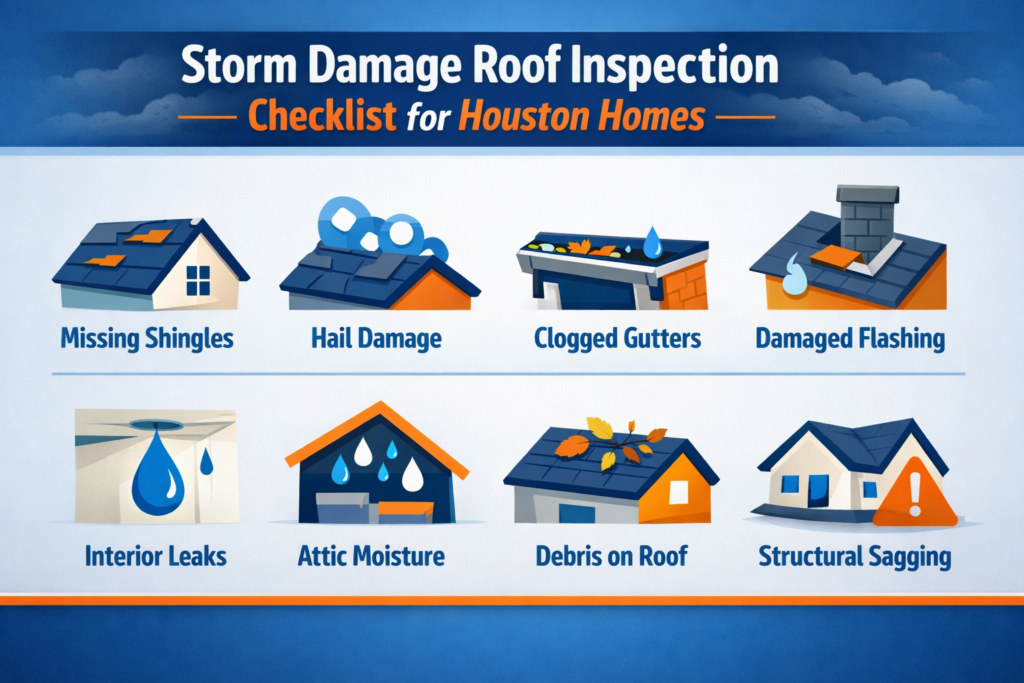
- Missing or lifted shingles
- Debris on the roof (branches, leaves)
- Visible sagging areas
- Damaged flashing around vents or chimneys
If something looks off from the ground, there’s a good chance it needs closer attention.
Check for Missing or Damaged Shingles
Shingles are your roof’s first line of defense.
Signs of damage:
- Cracked or curled shingles
- Bald spots (missing granules)
- Completely missing shingles
- Loose or flapping pieces
Houston winds can easily tear shingles away, especially on older roofs.
Look for Hail Damage
Hail damage can be tricky it’s not always obvious.
What to look for:
- Small dents or dark spots on shingles
- Soft spots when gently pressed
- Damage to gutters, vents, or metal areas
Even minor hail damage can shorten your roof’s life if ignored.
Storm Damage Roof Inspection Checklist Table
| Inspection Area | What to Look For | Why It Matters | Action Needed |
|---|---|---|---|
| Shingles | Missing, cracked, curled, or loose shingles | Can lead to leaks and water damage | Replace or repair immediately |
| Roof Surface | Dents, dark spots, soft areas (hail damage) | Weakens roof structure over time | Get professional inspection |
| Gutters & Downspouts | Granules, debris, clogs, dents | Affects drainage and roof lifespan | Clean or repair gutters |
| Flashing | Rust, gaps, loose or damaged flashing | Common source of leaks | Seal or replace flashing |
| Roof Penetrations | Damaged vents, skylights, chimney seals | Water can enter through weak points | Reseal or repair areas |
| Interior Ceilings | Water stains, discoloration | Indicates active or past leaks | Investigate and fix source |
| Attic | Moisture, mold smell, damp insulation | Hidden water damage risk | Improve ventilation, fix leaks |
| Structural Integrity | Sagging rooflines, uneven areas | Indicates serious damage | Immediate professional inspection |
| Debris on Roof | Branches, leaves, heavy objects | Can damage shingles and block drainage | Remove safely |
| Documentation | Photos of visible damage | Helps with insurance claims | Take clear photos for records |
Inspect Gutters and Downspouts
Your gutters tell a story after a storm.
Check for:
- Granules collecting in gutters
- Dents or cracks
- Loose or detached sections
- Blockages from debris
If you see lots of shingle granules, your roof may be wearing down faster than expected.
Check Flashing and Roof Penetrations
Flashing seals the vulnerable areas of your roof.
Focus on:
- Chimneys
- Skylights
- Vents
- Roof edges
Warning signs:
- Rust or corrosion
- Loose or lifted flashing
- Gaps or cracks
These areas are common leak entry points.
Look Inside Your Home
Sometimes the first signs of roof damage show up indoors.
Check ceilings and attic for:
- Water stains or discoloration
- Damp insulation
- Mold or mildew smell
- Dripping water after rain
If you notice any of these, your roof may already be leaking.
Watch for Structural Issues
Storms can do more than surface damage.
Be alert for:
- Sagging rooflines
- Uneven areas
- Cracks in walls or ceilings
These signs could mean deeper structural problems that need immediate attention.
Take Photos for Documentation
If you spot any damage, document it right away.
Why it matters:
- Helps with insurance claims
- Provides proof of storm impact
- Speeds up repair process
Take clear photos from multiple angles, both inside and outside your home.
Know When to Call a Professional
Some damage isn’t safe or possible to inspect on your own.
Call a roofing expert if:
- You suspect hidden damage
- Your roof is steep or hard to access
- There are signs of leaks or structural issues
- You need help with an insurance claim
A professional inspection gives you peace of mind and a clear plan of action.
Pro Tip for Houston Homeowners
Houston’s weather can change quickly. Even if your roof looks fine after one storm, repeated exposure can weaken it over time.
Scheduling regular inspections especially during storm season can prevent small issues from turning into expensive repairs.
Need Help With a Roof Inspection in Houston?
If your home has recently been hit by a storm, don’t wait until a small issue turns into a major repair.
The team at Pro Texas is ready to help with fast, reliable roof inspections and honest recommendations.
Conclusion
Storm damage isn’t always obvious, but ignoring it can cost you big.
By following this simple roof inspection checklist, you can catch problems early, protect your home, and avoid unnecessary stress.
And if you’re ever unsure, it’s always better to have a professional take a closer look.