


The issue of mold damages is critical and can be very costly to the houses in Houston. Given the humid weather of the city, the regular storms and occasional floods, it is possible that the mold can be built fast in the aftermath of the water destruction. However, the big question that most homeowners put forward is: Does insurance cover mold damage?
The solution is not necessarily straightforward. It is determined by the reason behind the mold, your insurance policy and the speed at which you responded. This manual simplifies all this into easy to understand pieces such that you can be informed of what to expect and how to defend your claim.
What Mold is and what Mold is not in Home Insurance
By default most of the traditional homeowners insurance cover in Houston does not cover the damages caused by the molds. Nevertheless, under certain circumstances, the mold can be covered.
Covered Situations
Mold damage is normally covered in case of an accidental and sudden event, like:
- Burst pipes
- Leaks of the appliances (washing machine, dishwasher)
- HVAC system malfunctions
- Roof leaks caused by storms
Mold in such instances is deemed an outcome of a peril covered and as such, your insurer can cover remediation and repairs.
Not Covered Situations
Mold claims are normally denied by insurance companies when the problem is brought about by:
- Leakage or improper maintenance in the long term.
- Humid or damp environment.
- Neglect or delayed repairs
- Flooding (unless you are insured separately)
Mold vs Water Damage: Why It Matters
Insurance companies treat mold differently from water damage.
| Factor | Water Damage | Mold Damage |
| Coverage | Often covered | Limited or excluded |
| Cause | Sudden events | Often gradual |
| Claim Success | Higher | Lower |
| Policy Limits | Standard | Usually capped |
An often covered amount is a mold coverage cap, which is not necessarily the full amount covered on the water damage, but is many times between 1,000 and 10,000 dollars.
Mold: Does Flood Insurance Protect Mold?
Flooding is a top issue in Houston. Nevertheless, flood damage is not covered on the usual homeowners insurance.
In case you are a policyholder with the National Flood Insurance Program (NFIP):
- Mold can only be covered in case of quick action.
- Cleanup delays may result in claim denial.
- The preventative precautions are anticipated.
This implies that time is very crucial in addressing post-flood mold.
Major Considerations That Impact on Your Mold Claim
Before insurance firms approve a mold claim, they consider a number of factors:
Cause of the Mold
What is the most significant is what led to the mold. Damage to which you are suddenly improved.
Speed of Action
When the damage to water occurs and you take too much time to repair it, they can refuse your claim on the basis of negligence.
Documentation
You shall require good evidence, such as:
- Photos of damage
- Repair receipts
- Inspection reports
- Moisture readings
Policy Details
Every policy is different. Look for:
- Mold exclusions
- Coverage limits
- Add-ons (extra cover) endorsements.
Mold Damage Claim in Houston
In case you find some mould in your house, then do the following:
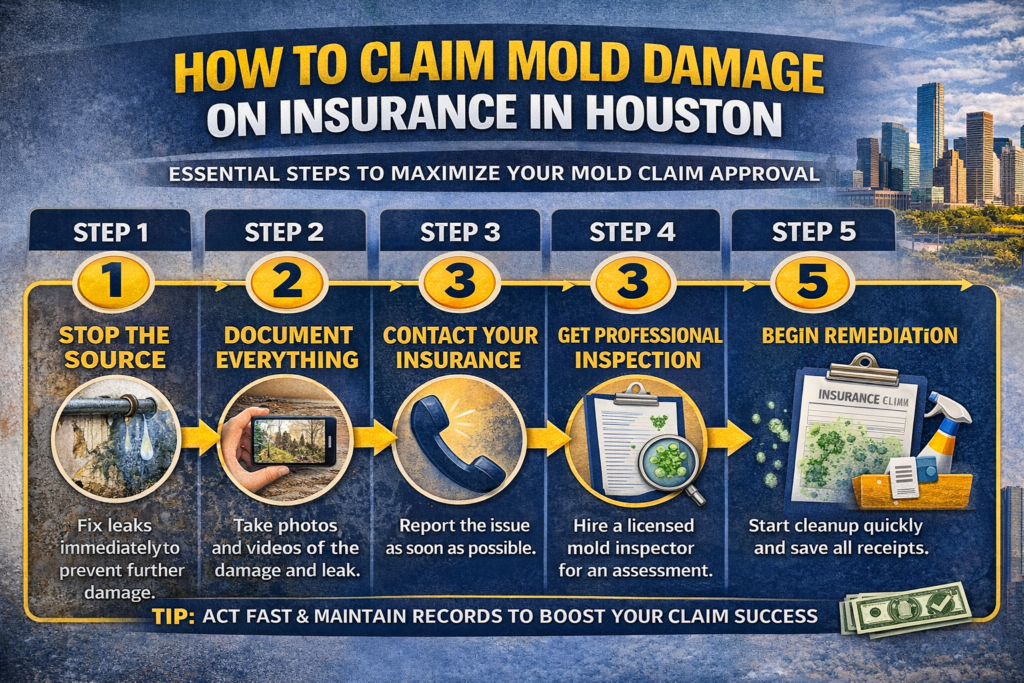
Step 1: Stop the Source
Correct water leaks or other water problems immediately to avoid the escalation of the damage.
Step 2: Document Everything
Record and take good photos and videos of:
- Affected areas
- Water source
- Mold growth
Step 3: Call Your Insurance Company.
Report the problem as soon as you can. Delays can hurt your claim.
Step 4: Obtain a Qualified Inspection.
Get a professional inspector of molds to help determine the severity and cause.
Step 5: Start Remediation
tart cleaning immediately, but do not forget receipts and records which will be reimbursed.
The Mold Insurance Claim Strengthening Tips
In order to increase your likelihood of success:
- Take action following water damage.
- Keep maintenance records
- Use licensed contractors
- Ask to be examined in detail.
- Do not attempt to fix serious cases of mould.
The insurance companies seek evidence that you were behaving responsibly.
When Mold Claims Get Denied
Even legitimate claims are refuted. Common reasons include:
- Lack of evidence
- Delayed reporting
- Maintenance-related issues
- Policy exclusions
- Disputed cause of damage
In case your claim is refused, then you can:
- Request a reassessment
- Hire a public adjuster
- Consult a lawyer where required.
Is Mold Coverage Worth Adding to Your Policy?
In the case of Houston, a smart idea can be the addition of a mold endorsement.
Benefits:
- Higher coverage limits
- Broader protection
- Humidity relaxation of the mind.
Consider It If:
- Your home is older
- You’ve had past water damage
- You live in a flood-prone area
If you’re dealing with mold damage or a denied insurance claim, the experts at Pro Texas can help you navigate the process and maximize your compensation. From inspection to documentation and claim support, their team ensures you take the right steps quickly, helping you avoid costly mistakes and improve your chances of approval.
Conclusion
Yes, you can claim mold damage on insurance in Houston—but only under the right conditions. The key factors are cause, timing, and documentation. Mold resulting from sudden water damage is often covered, while gradual issues or neglect are usually excluded.
To protect yourself, review your insurance policy carefully, act fast when damage occurs, and consider adding extra mold coverage if you live in a high-risk area like Houston.
Being proactive can make the difference between a successful claim and a costly denial.