


Homeowners in Greater Houston have a recurring problem of flooding. In a heavy rain, hurricanes, and overtopped bayous, water intrusion may be disastrous to the foundation and electrical wiring of a home. Most homeowners are concerned with the noticeable water damage, but the structural and electrical damages that cannot be seen may be even more threatening and more expensive.
Knowing the effect of flooding on these vital components of a home can make property owners respond promptly so as to avoid long-term problems.
The reason why Flooding is prevalent in Greater Houston
Greater Houston is in a distinctive geographical position prone to floods.
The reasons why there is so much water include:
- Flat and low-lying terrain.
- Closeness to rivers, bayous, and Gulf of Mexico.
- Heavy precipitation in storms and hurricanes.
- The development of the city decreases natural drainage.
Due to these circumstances, floodwater is able to penetrate houses and damage structural systems, as well as the electrical infrastructures.
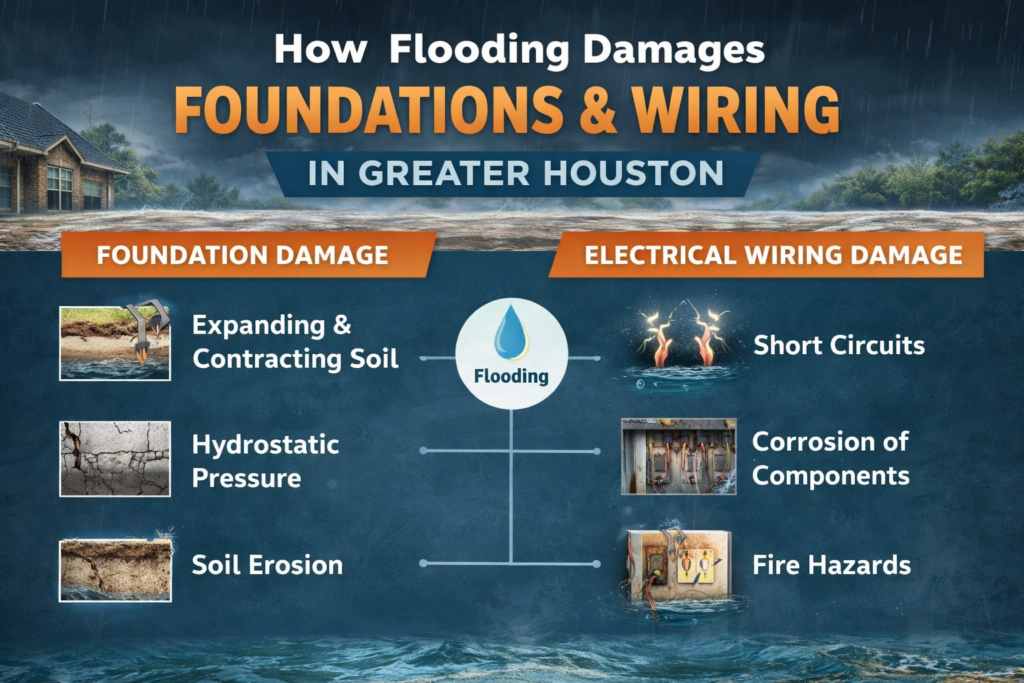
The damage caused by Flooding to Home Foundations
It has its base on the structure of a property. Flood water causes a change in the pressure and stability of ground that supports the structure when it saturates soils surrounding a home.
Soil Expansion and Movement
Soil absorbs water in large quantities thereby expanding. The soil sinks once more after the water has receded.
This continuous expanding and contracting may lead to:
- Foundation shifting
- Cracks in concrete slabs
- Uneven floors
- window and door mismatch.
Floods occurring frequently impair the integrity of the whole structure in the long run.
Hydrostatic Pressure of Foundation Walls
The water that has flooded the area near a property exerts hydrostatic pressure on the walls of foundations and basement structures.
This pressure can lead to:
- Foundation wall cracks
- Leakage of water to basements or crawl spaces.
- Stress of a structural nature that undermines the foundation of the house.
Unattended, these cracks might widen and need expensive repairs.
Undercutting below the Foundation
It may also result in the soil being washed away by floodwater below the foundation leaving hollows.
This may result in:
- Foundation settlement
- Uneven slabs
- Structural instability
Houses constructed on slab foundations (as is typical in the Houston area) are particularly susceptible to such a damage.
The effects of Flooding on electrical Wiring
Floodwater is not only harmful to the structures but also poses severe risks of electricity.
Short Circuiting and Failure of the system
When water gets in walls or electric panels, it may touch wiration and cause:
- Short circuits
- Electrical system shutdown
- Appliance damage
Wiring can still be a problem even after the water goes away as moisture in the wiring can still be an issue.
Electrical Component Corrosion
The water in the floods is usually filled with debris, chemicals, and contaminations. When such materials are exposed to wiring and electrical components, they enhance faster corrosion.
The affected components are:
- Circuit breakers
- Electrical outlets
- Switches
- Wiring connections
The unpredictable electrical failures can happen months later after the flood, as a result of corrosion.
Fire Hazards following flood damages
Most house owners believe that the electrical is safe when it is all dry. Nevertheless, insulation that is damaged and corroded wires also make electrical fires more likely to occur.
The typical warning signs are:
- Flickering lights
- Burning smells
- Frequent breaker trips
- Warm outlets or switches
In the event that these problems are observed following a flood, the electrical system needs to be checked as soon as possible.
Flood Damage Impact on Foundations vs Electrical Systems
| Area of Home | Flood Impact | Long-Term Risk |
| Foundation | Soil expansion and pressure | Structural instability |
| Foundation | Soil erosion | Settlement and cracking |
| Electrical Wiring | Water intrusion | Short circuits |
| Electrical Components | Corrosion | Electrical failures |
| Electrical System | Damaged insulation | Fire hazards |
Signs Your Home May Have Flood-Related Damage
The following are warning signs that should be observed by the homeowner in the aftermath of a flood:
- Cracks forming in walls or floor.
- Lumpy floors or stuck doors.
- Stale smells in the walls or crawl spaces.
- Electrical sockets that malfunction.
- Tripping of breakers.
Later repairs can be avoided due to a good early detection.
Prevention to the Houston Homeowners
The floods cannot be prevented at all times, but the owners of the properties can mitigate the possible harm.
Recommended steps include:
- Proper drainage systems should be installed.
- Keeping gutters and downspouts.
- Waterproofing foundations
- Raising electric panels and wiring.
- Arranging after-flood inspections.
This is so due to the fact that regular maintenance is vital especially in areas prone to floods such as Houston.
Long-term Property risk following flooding
The impact of flood damages can be long-term in terms of property value and safety. Structural problems can be aggravated over time whereas electrical problems can go undetected until significant dangers arise.
Stability of the foundation and electrical safety following the floods are the two critical issues that must be addressed to preserve the house and the occupants.
Professional repair services are needed by homeowners in case of storm or flood damages. Pro Texas Restoration professionals assist Greater Houston property owners to recover swiftly following water damages, the foundation pressure, and the dangers of electricity following acute storms.
Conclusion
Greater Houston can experience flooding that is much more than just water damage on a temporary basis. It is able to undermine foundations, cause structural instability and undermine electrical systems. These latent problems can not be noticed right away but can result in expensive repairs and safety risks when they are not considered.
Through the identification of the risks and the rapidity in taking action following a flood, homeowners are able to save their own assets and safeguard their homes to be sound and stable.