


Damage caused by water in multi-family buildings would impact on various tenants, common walls, and structures very fast. Houston has a humid climate, and moisture issues can quickly rise and expose the building to the danger of developing mold and structural damage. The background about Landlord Responsibilities of Water Damage Restoration in Houston Multi-Family Units is crucial to property owners, managers, and tenants.
Intrusion of water is caused by plumbing, roof leaks, HVAC condensation, storm or foundation problems. The aspect of responsibility and time response has significant importance in reducing damage and legal liability in buildings where there are many families.
The importance of quick response in a multi-family property
Multi-unit buildings have in common:
- plumbing systems
- structural framing
- electrical systems
- walls and ceilings
- HVAC infrastructure
A leak in one will soon be transferred to other units. Quick response will safeguard property and the tenants.
Moral duty to keep the environment livable
According to the Texas property law, landlords must ensure that the rental units are in a habitable condition. This involves the use of water, which causes health or safety damages.
Habitability standards usually involve:
- safe plumbing systems
- walls and ceiling that are in proper condition.
- absence of severe mold
- proper electrical safety
- operational cooling and heating systems.
Lease agreements and housing standards may be broken because of failure to deal with serious water problems.
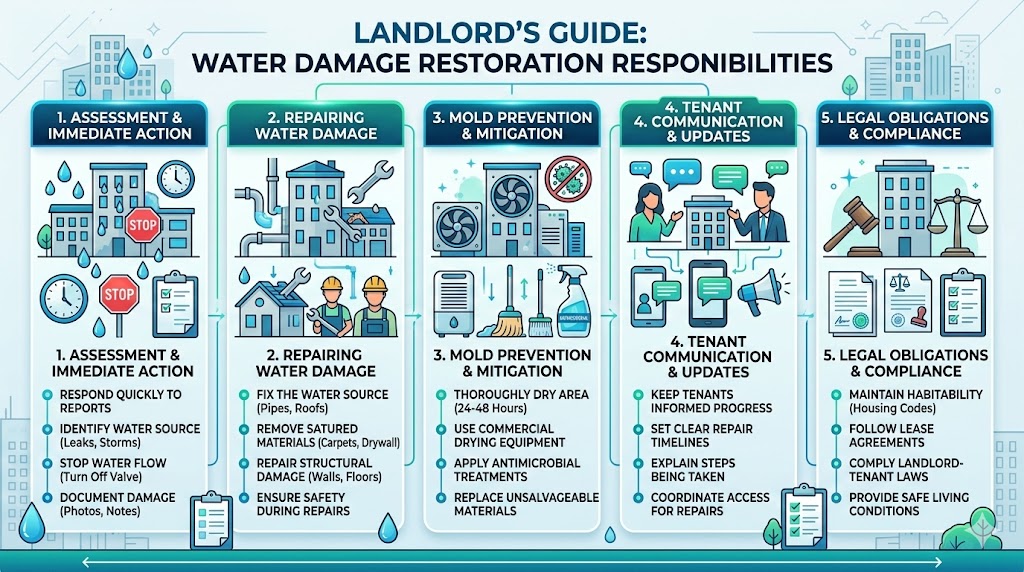
Straight away landlord obligations in the event of water damage
In cases of water damage, the landlords should:
- Find out the cause of leak at the earliest.
- Stop active water intrusion.
- Professional extraction and drying of water.
- Avoid secondary losses like mold.
- Liaise effectively with the stricken tenants.
Quick response minimises the liability on the Houston landlord water damage cases.
Determining responsibility: landlord vs tenant
Responsibility may depend on the source of damage.
| Cause of Water Damage | Likely Responsible Party |
| Plumbing failure | Landlord |
| Roof leak | Landlord |
| Appliance failure (tenant-owned) | Tenant |
| Negligent overflow | Tenant |
| Storm-related exterior breach | Landlord |
Clear lease agreements help define accountability.
Responsibility of mold prevention and remediation
The humidity of Houston is a cause of molds following water damage. Landlords should deal with mold that is a health or structural hazard.
The correct restoration incorporates:
- moisture testing
- drying equipment of a professional nature.
- removal of damaged drywall
- cleaning up if the HVAC is affected.
- mold treatment where needed.
The negligence of mold issues can add a legal liability to the contexts of Landlord Responsibilities in Water Damage Restoration in Houston Multi-Family Unit.
Considerations of temporary relocation
In case damage caused by water renders a unit inhabitable, landlords might be required to:
- offer temporary relocation
- reduce or suspend rent
- coordinate alternative housing.
- provide repair timelines
These procedures are frequently modified in lease agreements.
Requirement of insurance and documentation
Landlords should:
- damage of documents with photographs and reports.
- inform property insurers as soon as possible.
- store repair bills and subcontractor reports.
- provide tenants with restoration schedules.
- Disputes are guarded by proper documentation.
Restoration of structures and typical areas
Water damage may affect:
- hallways
- shared ceilings
- exterior walls
- parking structures
- stairwells
It is the duty of the landlords to ensure that they take care of the common areas.
Restoration process overview
| Step | Action |
| Assessment | Identify source and extent |
| Water removal | Extract standing water |
| Drying | Industrial dehumidification |
| Repair | Replace damaged materials |
| Prevention | Address underlying cause |
Professional restoration ensures full compliance and safety.
The best best practices of the tenant communication
Effective communication minimizes the misinterpretations.
Landlords should:
- accept repair requests in time.
- provide written updates
- explain repair timelines
- provide contact details in case of emergency.
- Openness enhances trust in tenants.
Maintenance to avert liability
Prevention is used to reduce the incidences in the future.
Recommended strategies:
- routine fire or plumbing inspections.
- post storms roof inspections.
- cleaning guttering and drainage.
- inspecting HVAC condensation lines.
- leak detecting systems installed.
Preventive planning is one of the ways to diminish the risk of water damage to landlord property in the future in Houston.
Common landlord mistakes
- lack of responsiveness in responding to leak reports.
- failing to do proper drying.
- disregarding small problems of moisture.
- not checking on the neighboring units.
- failure to test mold where necessary.
All these errors tend to add to the restoration expenses and legal liability.
Trusted Services Across Texas
When it comes to reliable, high‑quality services in Texas, Pro Texas stands out as a trusted name dedicated to exceeding customer expectations. Whether you’re seeking industry‑leading solutions, expert support, or tailored services designed to fit your needs, Pro Texas delivers professional results with a commitment to excellence and integrity. Learn more about how Pro Texas can help you achieve your goals by exploring their full range of services and customer‑centered approach at Pro‑Texas your go‑to destination for dependable expertise and exceptional service throughout the Lone Star State.
Cost implications of delayed action
| Response Speed | Damage Severity | Repair Cost |
| Immediate | Minimal | Lower |
| Delayed | Moderate | Higher |
| Ignored | Severe structural damage | Very high |
Timely action protects both finances and tenant health.
Final thought
The response to water damage in Houston multi-family premises requires a rapid and coordinated response. It is the legal and ethical obligation of landlords to keep the units safe and habitable and stop their further structural degradation. Timely repairs, crafting restoration, and transparent communication with tenants contribute to the reduction of the financial risk and preservation of property value. It is not only that that understanding of your responsibilities will lead to compliance; it will also mean long term tenant trust and stability in property.