


Residents living in Houston have to cope with moisture and indoor humidity all year around and unpredictable weather conditions. Even such a minor cause of plumbing as a small leakage or temporary freeze could cause a hidden water to start growing to a long-term problem with moulds.
Most homeowners remedy the problem that they see in their homes and yet they fail to stop the possibility of mold recurring in their homes a problem replicable in Houston. The mold persistently keeps reoccurring as far as moisture, airflow, and contaminated materials was not corrected.
This guide describes why mold grows back when there is a minor water event and how you can prevent it perfectly, without using any complex technological method.
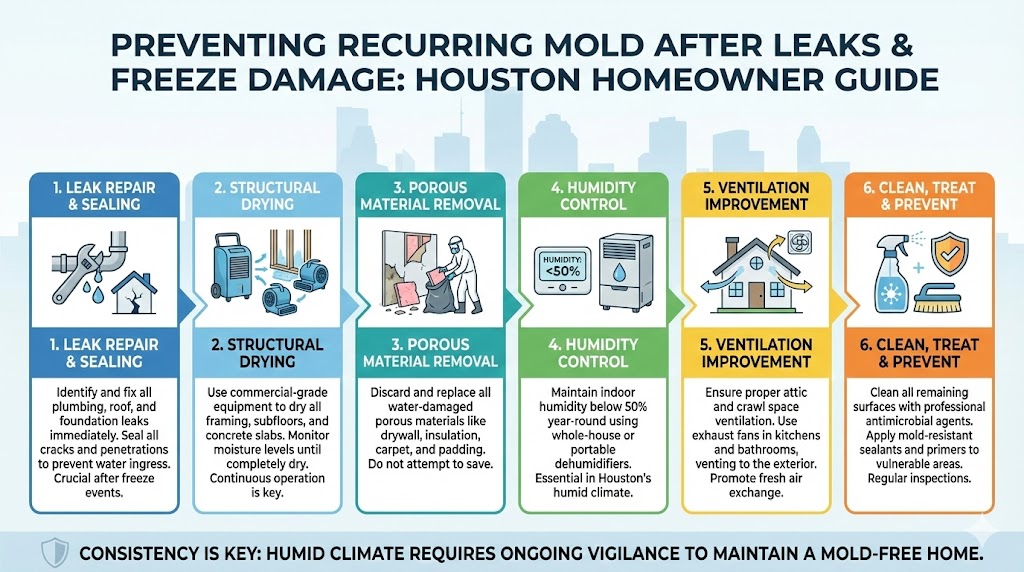
How repeated mold is caused by minor leaks and freeze damage
A drip-drop under a sink, a hose of a washing machine, a broken pipe because of a short freeze may not seem serious. But rainfall is doth of:
- drywall
- insulation
- baseboards
- subfloors
- wall cavities
After more than 24 to 48 hours, the materials remain wet and thus the mold spores start proliferating. Drying occurs naturally at a slower pace in the humid climates. This is why house owners are likely to experience difficulties preventing recurring moulds that Houston properties are so much renowned with.
Normal locations of moulds also reappear after minor water spills
The reoccurrence of mold in open areas is not common. It tends to recur in unexplainable areas, including:
- behind cabinets near sinks
- within wall cavities of plumbing lines.
- beneath laminar and vinyl floors.
- acoustic insulation at roof seals.
- around ducts and HVAC drain pans.
When cleaning is done superficially, the moisture that is hidden is left behind and it enables the growth of molds to resume.
The real reasons mold keeps returning
Here are the most common causes behind repeated mold growth after small leaks or freeze damage:
| Root problem | Why mold returns | What should be done |
| Wet building materials left in place | Mold grows inside drywall, wood, and insulation | Remove and replace affected materials |
| Poor drying after the leak | Moisture stays trapped behind surfaces | Use professional drying equipment |
| High indoor humidity | Mold reactivates even after cleaning | Control humidity with dehumidifiers |
| No air movement in closed areas | Moist air becomes stagnant | Improve airflow and ventilation |
| Incomplete cleaning | Spores remain on nearby surfaces | Perform full-area cleaning, not spot cleaning |
This table shows why cleaning alone does not reliably prevent recurring mold Houston homeowners deal with after water incidents.
Instructions on how to prevent the growth of mold again
Select the source of moisture fully.
The pipe with leak or frozen should be repaired in a worthy way before any cleaning begins. Even sluggish condensation on chilled pipes may maintain the growth of molds.
Check for:
- pipe sweating
- loose fittings
- small drips at valves
- damaged supply lines
Cessation of water source is the basis to prevent recurring mold that is common among the Houston residents.
Wipe the structure not only the surface
Open windows and fans are helpful though they do not normally dry interior walls or underneath floors.
Proper drying should target:
- wall cavities
- insulation layers
- subfloor panels
- framing wood
Unless dilapidated spots are dried up, mould will be back within weeks.
Eliminate contaminated resources
Drywall, carpet padding, insulation and particle board are porous and trap moisture and spores of mold. After being polluted, they are generally impossible to clean.
The need to do away with these materials is common in order to eliminate the recurrence of mold in Houston homes that have suffered small water damages, permanently.
Trusted Services Across Texas
When it comes to reliable, high‑quality services in Texas, Pro Texas stands out as a trusted name dedicated to exceeding customer expectations. Whether you’re seeking industry‑leading solutions, expert support, or tailored services designed to fit your needs, Pro Texas delivers professional results with a commitment to excellence and integrity. Learn more about how Pro Texas can help you achieve your goals by exploring their full range of services and customer‑centered approach at Pro‑Texas your go‑to destination for dependable expertise and exceptional service throughout the Lone Star State.
Take care of the immediate environment.
Mold spores are easy to disseminate due to the circulation of air. Cleaning should include:
- nearby walls and trim
- furniture and floors in the room in question.
- HVAC vents near the leak area
This will avoid re-contamination of repairs following repairs.
Regulate humidity in the indoors in the long-term.
In a humid climate humidity control is essential. Effort to maintain indoor humidity at 40 and 55%.
Without being anything complicated, it can be helped by making alterations as simple as:
- since it is operating dehumidifiers in problem rooms.
- with bathroom and kitchen exhaust-fans.
- caughing door and window air leaks.
- regular HVAC systems servicing.
The humidity must be handled on long-term basis to avoid triggering of mold Houston buildings fight with season after season.
Post-freeze special risk.
Freeze damage is a risky phenomenon since the actual leak can begin in days. Pipes may break Enclosed walls and leak slowly thus proving hard to notice.
Warning signs include:
- peeling paint
- bubbling drywall
- musty odors
- warm or cold spots on walls
In the event that the freeze damage has just happened then it is of importance to carry out moisture checks behind walls before the presence of the mold.
Final thought
Small leaks and malfunctioning freezes could appear harmless yet in damp conditions they tend to cause recurring mold issues. Removing visible mold is not the only important key but also getting rid of invisible moisture, contaminated materials and long-lasting problems with humidity. When carefully dried, the material replaced, and the airflow is controlled, you will finally be able to avoid the reoccurring mold that Houston homeowners are constantly fighting with and preserve their home or your indoor air.