


The climate in Houston is humid with seasonal storms, and thus houses are most susceptible to water infiltration. Excess moisture due to broken roofs, burst pipes, or flooding of basements, may provide ideal conditions of growth of black mold. Learning about the health hazards of black mold is extremely important in relation to the home owners aiming to put a safety net that surrounds the family and the property.
Tiny colonies of molds may provoke health problems and cause construction damage without any treatment. This guideline outlines the risks of black mold, exposure symptoms, and prevention of black mold among families in Houston.
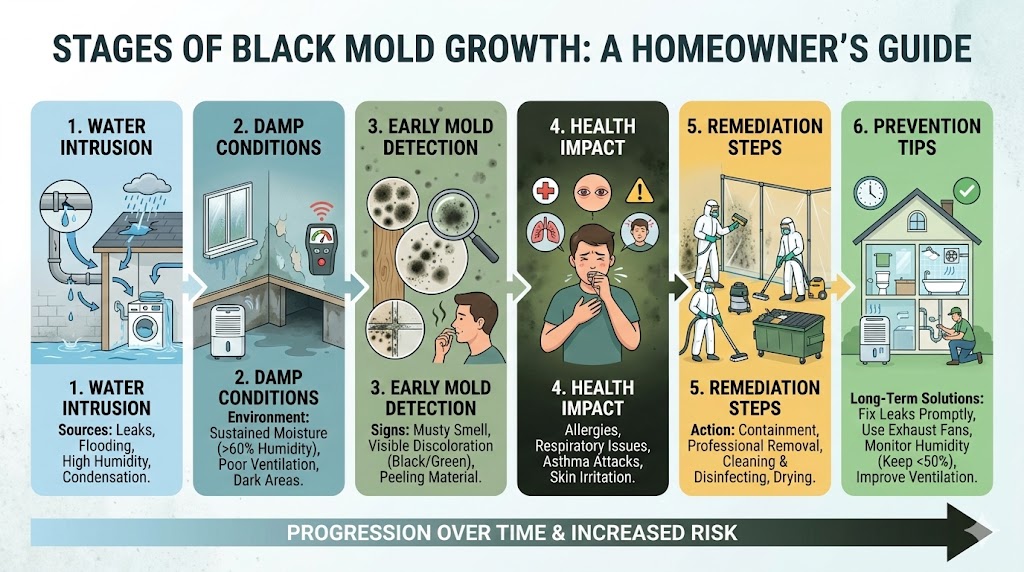
What is Black Mold?
Stachybotrys chartarum, which is also known as black mold, is a toxic fungus that develops in wet conditions. It normally manifests itself in black or dark green spots on the walls, ceilings or flooring when it is infiltrated by water. In contrast to cosmetic mold stains, black mold does produce mycotoxins and this can be lethal when inhaled, ingested or even touched.
The situation is especially vulnerable to Homes in Houston deeply affected by the abundance of humidity, rains, and frequent floods of low-lying territories. After the black mold sets in, it may expand rapidly, and both the visible and concealed places may be invaded such as the back of drywalls, underneath the floors, or in HVAC systems.
The effects of Black Mold Exposure on Health
Health risks associated with black mold would depend on the age, the immune status and the preexisting conditions.
Common symptoms include:
- Breathing difficulties: I keep coughing, wheezing, feeling out of breath.
- Nasal and sinus irritation
- Irration of the eye or weepy eyes.
- Skin rashes or irritation
- Headaches and fatigue
- Reaction and asthma deterioration.
Especially vulnerable are children, old age individuals and those who have weakened immune systems. Long time exposure can also prove to be dangerous in terms of long-term breathing complications and worsen existing respiratory conditions such as asthma.
Common Sources in Houston Homes
After water intrusion, black mold can develop quickly if moisture is not controlled. Common sources include:
| Source | Risk Factor | Recommended Action |
| Leaky roofs | Slow water seepage into attic spaces | Inspect and repair roof; check attic insulation |
| Burst pipes | Sudden flooding inside walls or under flooring | Dry affected areas; replace damaged drywall |
| Basement flooding | Standing water after storms | Use sump pumps; dehumidifiers; professional water extraction |
| HVAC systems | Condensation and duct leaks | Clean ducts; schedule regular HVAC maintenance |
| Window leaks | Moisture accumulation on sills and walls | Seal leaks; monitor wall moisture levels |
Understanding these sources allows homeowners to intervene early and reduce the likelihood of severe mold growth.
How to Spot the Black Mold in Your House
Mold is hard to detect since it grows in the dark corners. Early signs include:
- Stuffy smells in lower rooms or lofts, or crawl spaces.
- Wall, ceiling, or floor discolouration.
- Peeling paint or wallpaper
- Stains due to condensation or water.
Mycotoxins and the intensity of the contamination can be established with the help of professional mold testing. In the case of the black mold health risks, it is all about very early detection of the problem and then coming up with procedures of prevention and effective remedies.
Trusted Services Across Texas
When it comes to reliable, high‑quality services in Texas, Pro Texas stands out as a trusted name dedicated to exceeding customer expectations. Whether you’re seeking industry‑leading solutions, expert support, or tailored services designed to fit your needs, Pro Texas delivers professional results with a commitment to excellence and integrity. Learn more about how Pro Texas can help you achieve your goals by exploring their full range of services and customer‑centered approach at Pro‑Texas your go‑to destination for dependable expertise and exceptional service throughout the Lone Star State.
Successful remediation of Black Mold
After it is identified, it is necessary to remediate. Homeowners should:
- Isolate the affected zone to avoid the spreading of spores.
- Put on protective precautionary items such as masks, goggles, and gloves.
- Erase and clear off porous substances (drywall, carpets) which cannot be washed.
- Wipe non-porous surfaces using EPA approved moulds cleaners.
- Discuss the cause of moisture to avoid future cases.
Professional remediation is a sure way of obtaining a complete removal particularly in extensive cases. Routine monitoring and controlling of moisture levels in the house avert the risks of health of black molds in the future.
Mold Prevention after Water Intrusion
The best intervention is prevention among the Houston families. Steps include:
- Extraction of water as soon as there is a flood or leakage.
- Dehumidifier and ventilation to ensure that humidity is less than 50% indoors.
- Frequent roof and plumbing repairs.
- Leaks, cracks and water intrusion point of repairs, rapid.
Regular maintenance of HVAC to avoid condensation of ducts.
Correct prevention reduces structural and exposure health hazards.
When to Call a Professional
When the size of the mold exceeds 10 square feet and has reached concealed spaces or brings about chronic health effects, it is advised to seek the services of a professional. The Houston certified mold remediation companies possess special equipment and safety measures to handle the toxic mold safely.
There is no reason to overlook the problem of black mold and assume that the problem will not develop, which is why it is dangerous to the health of families, the prospects of expensive recovery, as well as endanger their health.
Final Thought
Black mold is not only a nuisance but also a deadly disease to families in Houston. It is through learning the causes, indications, and avoidances that the home owners are able to take precautionary measures or protect their beloveds and families. The best methods of reducing health hazards of black mold and ensuring a safe environment to live are early identification, appropriate remedial action, and moisture regulation.
FAQs
Can black mold cause serious illness?
Yes, exposure can trigger respiratory issues, allergies, and worsen asthma, especially in vulnerable individuals.
How quickly does black mold grow after water intrusion?
It can start forming within 24–48 hours if conditions are damp and poorly ventilated.
Can I remove black mold myself?
Small areas may be handled carefully, but professional remediation is recommended for widespread or toxic mold.