


Winters in Houston are unpredictable and result in severe house damage due to unpredictable freezes. As temperatures drop, frozen water pipes and water leakages are frequent problems that result in walls and ceilings having some hidden water damage. When you can see the first signs of water damage, which follow a freeze, you should take actions as soon as you can to avoid the permanent structural damage in the long run. It is here that you can learn to identify water damage in your home that you were not aware of and what to do, in case you think there is a leak.
What Is Hidden Water Damage?
Water damage is a situation where water trickles into the spaces of your house that are not supposed to have water and this leads to decay of such materials as wood, drywall, and insulation. This can begin small and grow bigger within a short time, causing a huge repair project had it not been attended to. When it comes to a freeze, water damage can be especially insidious in that the effects are not realized at once, since water can be contained within walls and ceilings.
Common Signs of Water Damage
| Signs of Water Damage | Possible Causes | Tools for Detection |
|---|---|---|
| Paint bubbling on walls | Water seeping under paint | Moisture detector, Infrared Camera |
| Musty smells | Water leakage or trapped moisture | Moisture detector, Visual inspection |
| Water stains | Leaks from pipes or roofing | Visual inspection, Moisture meter |
| Discoloration on walls | Slow leaks or plumbing issues | Moisture detector, Infrared camera |
| Sagging or warped ceiling | Frozen pipes or burst plumbing | Infrared camera, Moisture meter |
| Mold growth | Long-term water exposure or leaks | Mold test kits, Visual inspection |
Walls and Ceilings Early Water Damage
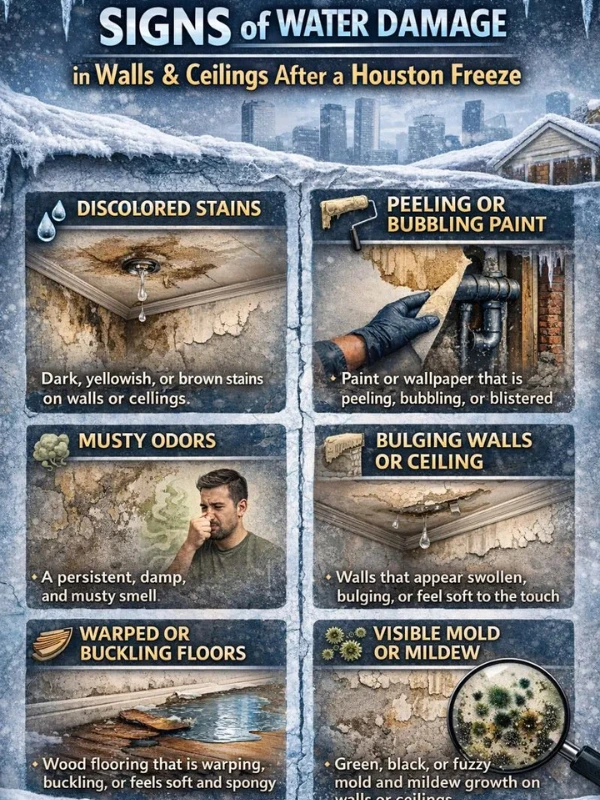
Water leaks may occur in a short time after a freeze. Bubbles on the paint on walls are one of the first indications of vacation of water in the walls and ceilings. This occurs when the water seeps under the paint and it lifts it. When you see this in your house, then you have to take action. The following are other water damage indicators to be observed:
The symptoms of water damage on ceiling at the first glance: Often, the first visible symptoms of water leakage are the dark spots or water stains on the ceiling. These marks may serve as a sign that water has leaked out of a pipe that has burst or frozen plumbing above.
Water damage wall: When you realize that your walls are so soft, discoloured, and warping, chances are that it is because of water damage on the wall. There are instances where the water will find its way behind drywall and therefore make the material to weaken and degenerate.
Water leak in ceiling: When you notice that your ceiling is sagging or discoloured, or you notice water dripping down your walls after a freeze, then you are almost certain that there is a water leak in the wall that requires your immediate attention.
How to Detect Water Leaks in Your House
Locating leaks in your walls may be a challenging task but when you have the right tools then you can identify the leak. Here’s what you can do:
Wall moisture detector: Wall moisture detector is a rather important device to assist in detecting water damage in the walls. These are gadgets which use sensors to identify the level of moisture on your walls and ceiling and will give you a clear picture of possible water damage.
Finding a water leak in your house: In the event you do not know where the leakage is, first, the water meters should be checked and whether there is a sudden rise in water consumption or not. This is possibly going to assist you in finding the point where the leakage is.
How to locate water leak in a wall: Infrared thermography is used and can identify the differences in temperatures that signify the presence of water. Another way to determine whether the wall has been destroyed by water is to tap the wall and listen to hollow sounds.
What would I do in case of a Suspected Water Damage?
When you observe the first indications of water damage in the ceiling or walls after what was frozen, do not delay too long to take action. Here’s what you should do:
Get in touch with a water damage expert: An expert water damage expert will be able to do a proper water damage assessment to figure out the scope of the problem and be able to repair water damage properly.
Water damage appearance: The appearance of water damage may be different according to the time the water remains, though typical signs of water damage are discoloration of the area, sagging, and bending. Wall or ceiling damage water signs may be in the form of small stains but the damage can be deteriorated with time.
How to repair water damage: Repair of water damage might involve the replacement of drywall, replacement of frozen pipes or water leaks. Before you do repairs, you will have to deal with the cause of the issue. In case water has penetrated your drywall or insulation, you should change the insulation and drywall to prevent the growth of molds and mildew.
The Prevention of Water Damage in the Future.
After you have solved the situation with the damaged house of water now it is necessary to act to prevent the new problems:
Insulate pipes: Insulate the pipes with foams sleeves or heating tapes to ensure that they do not freeze in future. This aids in the circulation of water even in the highly cold weather conditions.
Keep your house warm: Have your house well heated during cold spells, especially in places where it is likely to be damaged by freezing such as attics, crawl spaces.
Periodical service: Have routine plumbing inspections to examine your water system weaknesses including cracks or corroded pipes.
Who to Call to Repair Wall or Ceiling Leaks of Water.
In case you do not know what to do or have some difficulties with repairing water damaged walls and ceilings, you can always contact a water damage expert. Professional advice and assistance in the repair of water damage procedures can be offered by them. In case you are asking yourself whom to call when you have a water leak in a wall, the right one to contact is a qualified contractor or restoration expert.
For professional help with water damage repairs, consider reaching out to experts at Pro-Texas Restoration Services. Their team specializes in handling water damage assessments and providing fast, reliable house water damage repairs.
Conclusion
Water damage without freezing may cause a lot of havoc on your house unless dealt with promptly. It is very important to realize the early problems of damage caused by water to walls and ceilings in order to prevent worse damage. Watch out about the bubbles on the walls, leaks of water, and discoloration and always call a professional to investigate the damage. When it comes to dealing with water damage house, you can be able to fix the damage and avoid further complications in the future by acting quickly and employing tools that are appropriate.
FAQ
Deposits of hidden water in walls and ceilings after a Freeze in Houston: Frequently asked questions.
Do you know you have water behind walls?
Water damage behind walls may not be easy to notice and anyhow there are some signs that you can observe. One of the common signs that there is water behind the drywall is the paint bubbling on the walls. You can also see water spots or discolouration on your walls or smell of a damp smell in places that cannot be easily reached. Wall moisture detector will also assist you in correctly determining the hidden water damage at the back of your walls.
Can water damage be hidden?
Yes, water damage may be concealed behind walls, ceilings and even the floor. The damage is often not obviously visible as the water can seep into places that are not always visible at first, e.g. insulation or behind drywall, before it starts showing any external indication. Water damage in such situations can be very minor and the damage may be aggravated when it is not identified early. The application of a tool such as moisture detectors and infrared thermography can be used to identify water that does not appear on the surface.
What is the answer to the question: How do you know whether you have a hidden water leak?
In order to know whether you have a hidden water leak, you would need to review your bills of water usage to see whether there is an increase in water usage that is not expected, you would also need to check to ensure that there is unwarranted dampness on walls or floors, and also, you would need to check to see whether there is a growth of mould or water spots. Should you suspect that there is some hidden leakage in your walls or ceiling, a moisture detector of walls or an infrared can be used to know the precise location of the leakage.
Is it possible to tell whether or not a ceiling is damaged by water?
When you observe water stains or dark areas on your ceiling then it is a great indicator that there is water damage. Other indications are a sinking or a bending in of the ceiling, or the occurrence of mould or mildew. These problems can be caused by leakage of water in the wall over the ceiling. Cases of water damage on the ceiling should not be overlooked because they may translate to more serious repairs in case they are not mitigated.
Is there a detector of moisture in walls?
Yes, there are tools, there are special tools, such as moisture detectors of walls, that make use of sensors in order to detect moisture behind the drywall and other surfaces. These gadgets are essential in detecting the presence of concealed water damage wall that can not be detected instantly. Using a moisture detector may assist you in determining the level of damage after a freezing and detecting hidden leaks just in case you suspect water damage.
What is the way you tell whether your water is leaking or not?
Leaks that move slowly do not necessarily mean that there is an immediate evidence of water damage, but you can consider some signs. These consist of the damp or musty odors, slow discolouring or bending of walls or floors or even the rise in your water bills. There is no better method of detecting these slow leakages than a good moisture detector on the walls in order to avoid the damage in the long run.
What is the best way to test a wall to find out whether it has been damaged by water?
In order to detect the presence of water damage to a wall, one can check the moisture in the wall by measuring it with a moisture meter or detector. Other signs that you can search to indicate that water has leaked into the wall are discoloration, bubbling, or mildew growth. A hollow sound can also be achieved by tapping on the wall in case water has made the drywall weak.
What can the initial indications of mold on the walls be?
The initial symptoms of wall molds are discoloration (most of the time green or black), musty smell, and tiny, fuzzy spots on a wall. Mold may develop rapidly, though, and, therefore, in case you observe such initial symptoms, you should move fast and handle the resulting water damage that is causing the problem. Mold may grow in those areas that had been subjected to prolonged exposure to water leakages.
This damage caused by water damage wall or ceilings can be reduced by being proactive and having the appropriate tools to identify and resolve water leaks. It is good to always seek the advice of a water damage specialist in the event that you need a professional assistance to do the repairs on water damage caused after a freeze.